What is a food forest and what's the hype ?

Updated: Mar 23
What is a Food Forest?
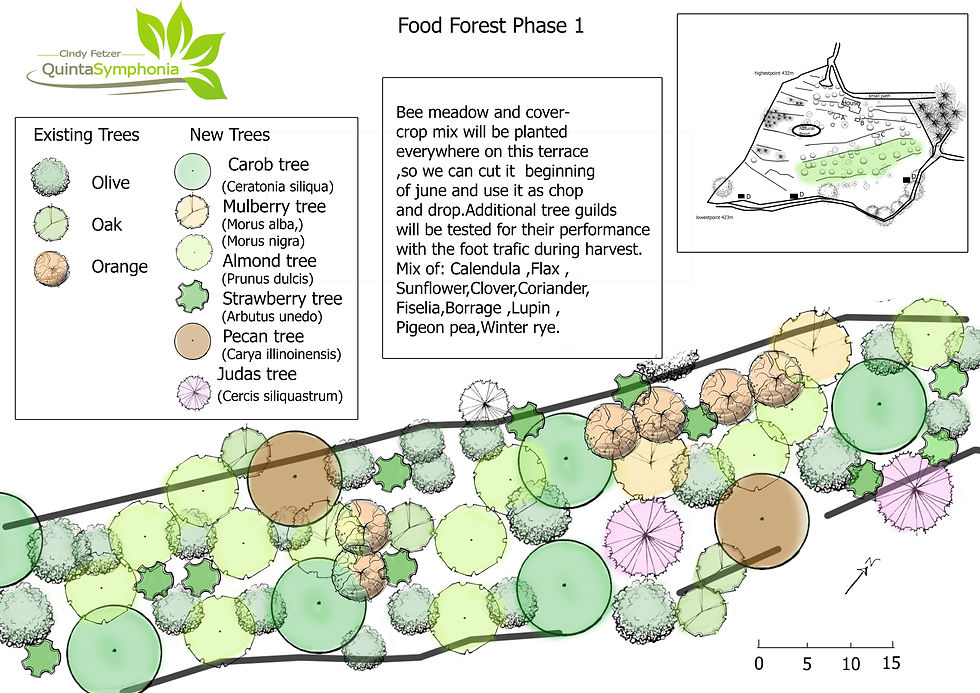
A food forest is one of the most inspiring ways to grow food. Instead of planting in rows or separating plants into strict categories, a food forest is designed to work more like a natural ecosystem. It combines trees, shrubs, herbs, and ground-cover plants into a layered system that supports itself over time. The goal is not just to grow food, but to create a living, resilient garden that becomes more productive and balanced each year.
A Different Way of Gardening
In many traditional gardens, we control every detail—soil, spacing, watering, and inputs. A food forest takes a different approach. It works with natural processes instead of against them. Plants support each other, soil improves over time, and the system becomes more stable and self-sustaining. This approach is closely connected to permaculture, where observation and thoughtful design are more important than constant intervention.
The Layers of a Food Forest
A food forest is often described as a layered system, similar to a natural forest.
Trees
Fruit and nut trees form the upper canopy. They provide structure, shade, and long-term harvests.
Shrubs
Berry bushes and smaller fruiting plants grow beneath the trees, adding diversity and productivity.
Herbs
Culinary and medicinal herbs fill the middle layer, supporting both people and pollinators.
Ground Covers
Low-growing plants help protect the soil, retain moisture, and reduce weeds.
Root Crops
Underground crops make use of the soil below, adding another layer of production. Together, these layers create a dense and productive system where every space is used thoughtfully.
Why Food Forests Are Becoming Popular
Food forests are gaining attention for a reason—they offer solutions to many challenges in modern gardening and agriculture.
Biodiversity
Instead of growing a single crop, food forests include many different plants. This diversity makes the system more resilient and supports wildlife.
Soil Health
Fallen leaves, roots, and plant diversity naturally improve soil over time. This reduces the need for fertilizers and external inputs.
Food Security
A well-designed food forest can provide a wide range of food throughout the year, from fruits and nuts to herbs and greens.
Low Maintenance
Over Time While a food forest requires planning at the beginning, it can become relatively low-maintenance as it matures.
A More Meaningful Garden
Food forests shift the focus from productivity alone to connection, observation, and long-term thinking.
A Food Forest Can Be Small
One common misconception is that you need a large space. In reality, food forest principles can be applied to: small gardens backyards even sections of a larger garden You don’t need to create a full forest—just start layering plants and thinking in systems.
Beyond Food: A Creative Garden
One of the most interesting aspects of food forests is that they don’t have to produce only food.
They can also include plants for:
natural dyes
incense
craft materials (like gourds)
medicinal use
This creates a garden that is not only productive, but also creative and inspiring.
My Approach to Food Forests
In my own garden, I’m interested in combining:
food production
useful plants
creative materials
This means growing not only edible crops, but also plants that can be used for natural dyes, crafts, and other forms of creative work.
A food forest becomes more than a garden—it becomes a living system that supports multiple aspects of life.
Getting Started
If you’re curious about food forests, you don’t need to start big. Begin by:
• observing your space
• planting a few complementary species
• adding layers over time
Even small changes can move your garden in this direction.
Final Thoughts
A food forest is not just a technique—it’s a different way of thinking about gardening. It invites us to see plants as part of a system, rather than isolated elements.
Over time, this approach creates gardens that are more resilient, diverse, and connected to the natural world.
Want to Go Further?
If you’re interested in designing a garden that includes food, craft materials, and useful plants, this is something I explore through garden consultations and hands-on workshops.
You can also explore related topics on the blog:
• growing gourds for craft
• plants for natural dyes
• heirloom plant varieties


Comments